
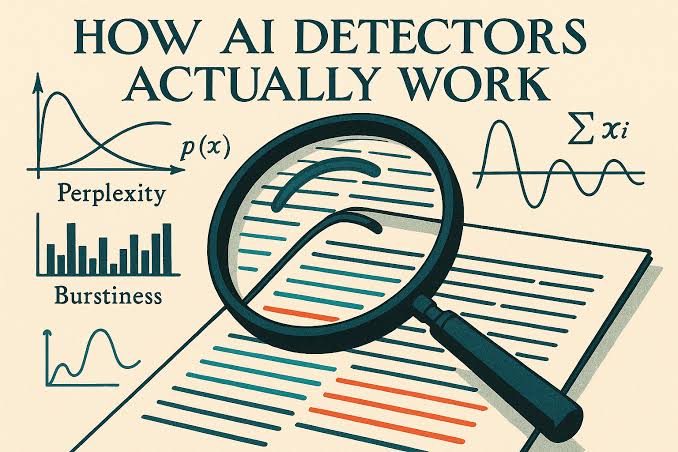

In 2026, AI detection has become an important instrument in many aspects of life. It is used by universities to detect cheating cases. It is used by publishers when processing manuscripts. It is used by employers when reviewing candidates’ writing samples. However, the efficiency of the tool largely depends on the platform that you use, and it may result in some serious errors.
In this paper, we conducted a comparative test of the three most popular AI detection tools on the market: “Turnitin,” “GPTZero,” and “Copyleaks”. These tests were done based on real writing samples, pure AI text, text written by humans, and humanized AI text. This test will show us the real efficiency of these instruments and their possible errors.
How We Tested: Methodology
To maintain the objectivity of this experiment, we have developed a testing framework consisting of four categories of texts:
1. Pure AI-Generated Text – Content that is created using large language models without any form of editing or modifications. This represents a relatively easy task for a detector.
2. Human Written Text – Texts created by actual people, varying from style to academic essays, blogs, and technical writing. This kind of text is needed in order to find out false positive rates of a detector.
3. Humanized AI Text – Text created using an AI that went through “AI humanizer tools” to test how resistant each detector is to this kind of text.
4. Hybrid/Mixed Text Content consisting of text passages generated by AI and edited by a human being, which reflects the way in which most real world content is produced.
Every sample has been checked using all three plagiarism detection services, and we have determined the accuracy, the false positive rate and the consistency of results for the same piece of text after running it through the same tool several times. We have also looked into the way in which each service estimates its accuracy.
Turnitin’s AI Detection: Accuracy Breakdown
“Turnitin” continues to dominate the scientific field, and its AI detecting system is integrated into most of the plagiarism checkers used by universities worldwide. Thus, the tool that we have selected as an option for detecting AI-generated text is the most widespread and, according to our experiment, the most accurate in terms of identifying text created by AI systems not trained to beat plagiarism checkers. However, it is essential to note that the program underperformed when it came to detecting humanized AI text.
Our experiment demonstrated that Turnitin had difficulties spotting text generated by AI that was restructured to meet standard requirements. The issue was linked to the fact that its algorithm focuses too much on the predictability of sentences, and therefore altered versions of AI text, which have higher burstiness, are less likely to be flagged. The second limitation was related to Turnitin’s false positive rate, which was particularly surprising considering the academic writing and the formal tone of the text. Several samples had a significantly high percentage of AI content, which could be confusing for students who use formal language in their essays.
GPTZero: Accuracy Breakdown
GPTZero is one of the first AI detection tools that have received widespread attention and keeps refining its model ever since. During our experiments, we noticed that GPTZero demonstrated high sensitivity to two metrics of “perplexity” and “burstiness,” and this is quite reasonable since these are the main factors used by the tool.
In relation to AI-generated texts, GPTZero was able to identify them efficiently and demonstrated a lower rate of false positives when dealing with human texts than Turnitin, especially in the case of non-formal style of writing.
As for the weakness of GPTZero, we should note that it could not properly detect highly humanized texts designed to meet the scoring criteria of this tool. Since the methodology of GPTZero concerning perplexity and burstiness is well-known due to public documentation, the creation of humanizer tools that would take this information into consideration and exploit the weak points of GPTZero was quite easy.
Copyleaks: Accuracy Breakdown
However, the solution provided by “Copyleaks” has a somewhat different technical background, as it integrates AI detection with the existing infrastructure of plagiarism and content verification. The consistency of the scores Copyleaks provided in our test run is higher than any other detector we used; the fact that some detectors provided different confidence scores after submitting the same text several times can be considered an indicator of the lack of reliability.
The tool coped with the identification of pure AI content well enough and had a low rate of false positives on human-written texts. Regarding humanized text detection, it performed quite satisfactorily: it was better than GPTZero but worse than Turnitin’s.
One of the advantages is that Copyleaks copes well with mixed/hybrid content. In today’s reality, when almost all texts in real life are written with the help of AI and then corrected by humans, this type of text becomes increasingly relevant.
Head-to-Head Comparison Table
Here’s how the three tools stacked up across our core testing categories:
| Metric | Turnitin | GPTZero | Copyleaks |
| Pure AI text detection | Strong | Strong | Strong |
| False positive rate (human text) | Moderate | Low | Low |
| Humanized text detection | Moderate-High | Low-Moderate | Moderate |
| Scoring consistency (repeat runs) | Moderate | Moderate | High |
| Mixed/hybrid content handling | Basic (binary) | Basic (binary) | Detailed (percentage-based) |
| Primary use case | Academic institutions | General/journalism | Enterprise & publishing |
For a deeper look at how these scores translate into real percentages and rankings across a larger sample set our full AI detector accuracy comparison breaks down the leaderboard in more detail including how each tool performs across different content types like academic writing, marketing copy and technical documentation.
Why Detectors Disagree With Each Other
Perhaps you’ve tried running the same passage through several AI detection tools and received drastically different outcomes, and you were far from being alone. There are very practical explanations behind such inconsistencies.
Diverse Training Samples: Each detection tool uses its own set of examples of AI-generated and human-authored texts as part of the training process. If Turnitin uses academic samples in abundance while GPTZero uses more diverse sources of online content, their sensitivity toward different types of writing will be distinct.
Diverse Core Metrics: Most detection tools use the concept of either perplexity or burstiness in varying degrees, or even both concepts together. A tool with more emphasis on the latter will react differently to differences in the length of sentences compared to the former.
Detection Models With Different Update Schedules: Detection models need to be trained again regularly as more humanizing strategies are discovered. While a program updated last month can detect certain features missed by an outdated detection tool, the same piece of writing can get quite different scores based on the time of updating of the corresponding platform’s detection algorithm.
Differences in Threshold Levels: While two different detection programs may generate almost identical values in the process of detecting a certain writing sample, the threshold levels can differ. So the detection level of 60% in one tool may correspond to the level of 75% in another one.
That is exactly the reason why using only one detector for important decisions like penalty for academic work, removal of the text from the platform etc. is not a good idea at all.
How Humanized Text Performs Against All Three
This is what makes this test even more intriguing. The difference in the output of the detectors was higher compared to all other tested content categories when it came to humanized AI.
The GPTZero detector had the lowest ability to detect humanized texts within the sample set, probably due to the fact that its scoring algorithm is the best known to the public, allowing for humanizers to target it. Copyleaks took an average position, while the most robust one to humanized text proved to be Turnitin, but still not as effective as its output against pure AI content.
However, it should be mentioned that different results were achieved, depending on the quality of the humanizing tool. For example, the text being checked by a simple and single humanizer algorithm was caught more often compared to text checked by an advanced humanizer targeting perplexity, burstiness, and semantic consistency separately.
This resonates with discussions that have been made by people online. In looking at what Reddit says about AI humanizers, one thing that comes up frequently is the fact that user experiences are different depending on what humanizer they use, thus confirming the notion that not all humanizers are created equal in terms of their technical level.
What This Means for Students, Writers & Publishers
The lesson for students here is clear and significant: no single detector of AI use can be considered absolute evidence of such usage, particularly when considering our data about the rate of false positives in relation to structured human writing. The case where you receive accusations based on a score by a single AI detection tool can be explained by understanding how these detectors work.
For writers and content providers, the variability in detection results means that even optimizing content for one tool does not necessarily ensure good results for another one. If detecting AI usage is important for your content then testing it using several tools is better than relying on just one score.
For publishers and institutions, the research proves that using one AI detector as a sole criterion for filtering out AI-generated content is extremely risky and prone to error both in terms of missing AI content and falsely accusing human-written content.
Conclusion
AI detection in 2026 is far from a solved problem. Turnitin, GPTZero, and Copyleaks each bring different strengths and blind spots to the table, and none of them should be treated as an infallible verdict on their own. Understanding how each tool actually works and where they tend to disagree is essential for anyone whose academic standing, published work or professional reputation depends on the outcome of these scores.
FAQs
Which AI detector is the most accurate in 2026?
No single tool is universally most accurate. Turnitin tends to perform best against humanized text, GPTZero shows the lowest false positive rate on human writing, and Copyleaks offers the most consistent scoring across repeated runs. The best choice depends on your specific use case.
Are there cases where the AI detection tool gives false positives on human-written texts?
Yes, indeed, and this has been found to be an issue across all the most popular AI detectors, especially with regards to structured, formal, and repetitive types of text.
Does humanizing AI text guarantee that it will go undetected by the detector?
No, not really, since the results also largely depend on how good the humanizer tool being used is. The basic humanizer tools get detected more than the more sophisticated, multi-pass ones that are tailored towards the metrics used by the AI detection tools.
Can schools or publishers use just one AI detector?
Based on the findings we have discussed above, we can say that using just one detection tool may pose significant risks in terms of false positives and even misses.