
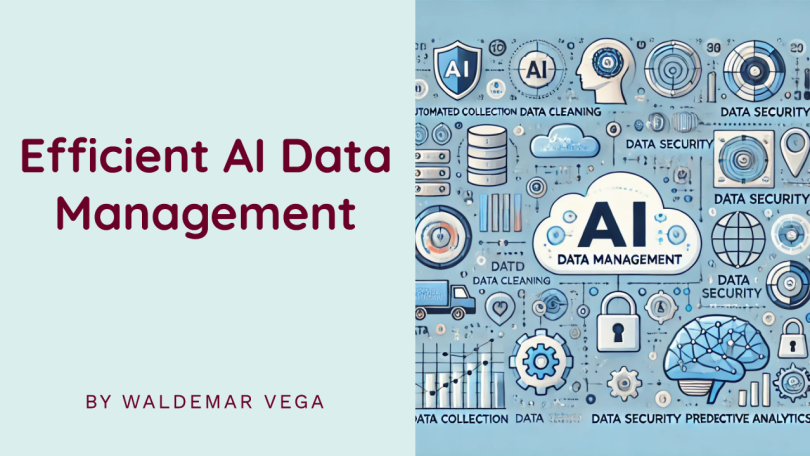

Most enterprises are not struggling to collect data. They are struggling to use it effectively. As AI adoption expands across business functions the focus is shifting from data accumulation to intelligent utilization. AI data management provides the framework needed to prepare organize and operationalize data for AI driven outcomes.
Enterprises generate massive volumes of structured and unstructured data across systems. However much of this data remains underutilized due to poor organization limited visibility and inconsistent quality. According to IDC organizations that effectively manage data for AI can achieve up to 30 percent faster time to insight. This highlights the importance of aligning data management strategies with AI initiatives.
From Traditional Data Management to AI Driven Models
Conventional data management focuses on storage integration and access. AI data management expands this scope by ensuring that data is optimized for machine learning analytics and automation.
This shift introduces new requirements:
- Data readiness for training and inference
- Continuous data quality monitoring
- Integration across diverse data sources
- Real time data processing capabilities
Unlike traditional systems AI requires dynamic data pipelines that can adapt to evolving models and workloads.
Why AI Data Management Is a Strategic Priority
Organizations are investing heavily in AI but many initiatives fail due to poor data foundations. AI data management addresses this gap by ensuring that data is reliable accessible and aligned with business objectives.
Gartner reports that poor data quality costs organizations an average of 12 million dollars annually. In AI driven environments this impact is even greater as inaccurate data leads to flawed models and incorrect predictions.
Scalability is another key factor. AI workloads require large datasets that must be processed efficiently. Without proper management systems struggle to handle the volume velocity and variety of data.
Data accessibility also plays a critical role. Teams need seamless access to relevant datasets to develop and deploy AI models effectively.
Core Components of AI Data Management
A strong AI data management framework is built on multiple components that work together to support AI workflows.
Data ingestion ensures that data from various sources is collected and integrated into a unified system. This includes structured databases unstructured files and streaming data.
Data preparation focuses on cleaning transforming and enriching data. High quality data is essential for accurate AI models.
Data storage and organization ensure that data is stored efficiently and can be accessed quickly. This includes the use of data lakes data warehouses and hybrid storage systems.
Data governance provides control over data usage security and compliance. This ensures that data is managed responsibly.
Data orchestration enables the coordination of data pipelines ensuring that data flows seamlessly between systems and applications.
How AI Data Management Works in Practice
Implementing AI data management involves creating an ecosystem where data flows seamlessly from source to insight. This requires a combination of tools processes and automation.
The process begins with data discovery. Organizations identify available data sources and assess their relevance for AI use cases.
Next comes data integration. Data from multiple sources is combined into a unified environment. This eliminates silos and improves accessibility.
Data preparation ensures that datasets are clean consistent and ready for analysis. This step often involves removing duplicates correcting errors and standardizing formats.
Model integration connects data pipelines with AI models enabling continuous learning and improvement.
Monitoring and optimization ensure that data pipelines remain efficient and aligned with business needs.
Business Impact of AI Data Management
Organizations that implement AI data management effectively see significant improvements in performance efficiency and innovation.
Faster decision making is one of the key benefits. With well managed data AI models can generate insights quickly and accurately.
Cost efficiency improves as redundant data is eliminated and storage resources are optimized. Forrester indicates that organizations can reduce data management costs by up to 35 percent through optimization.
Improved model accuracy leads to better business outcomes. High quality data ensures that AI systems deliver reliable predictions.
Enhanced collaboration enables teams across the organization to access and use data effectively. This supports innovation and cross functional initiatives.
The Role of Automation in AI Data Management
Automation is a critical enabler of ai data management. It reduces manual effort and ensures consistency across data processes.
Automated data pipelines handle ingestion transformation and movement of data. This improves efficiency and reduces errors.
Machine learning models can be used to detect anomalies in data ensuring quality and reliability.
Automation also supports scalability allowing organizations to handle increasing data volumes without additional resources.
McKinsey reports that automation in data management can improve productivity by up to 25 percent. This demonstrates its impact on operational efficiency.
Where AI Data Management Delivers Value
The benefits of AI data management are evident across industries where data plays a central role in decision making.
Healthcare organizations use AI data management to support diagnostics and patient care. Financial institutions rely on it for fraud detection and risk analysis. Retail companies use it to personalize customer experiences. Technology firms leverage it to develop advanced AI applications.
In each case the ability to manage data effectively determines the success of AI initiatives.
Quick View: Key Functions of AI Data Management
- Data ingestion and integration
- Data preparation and quality management
- Storage and organization
- Governance and security
- Orchestration and automation
These functions ensure that data is ready and usable for AI driven processes.
Answers to Common AI Data Management Questions
- What is ai data management?
It is the process of managing data specifically for AI systems ensuring it is clean accessible and ready for analysis. - Why is ai data management important?
It ensures that AI models are built on high quality data leading to accurate insights and better business decisions. - How does ai data management improve AI performance?
By providing reliable and well organized data it enables models to learn effectively and produce accurate results. - Can AI data management be automated?
Yes, automation is widely used to manage data pipelines improve quality and scale operations. - What types of data are used in ai data management?
Structured data unstructured data and streaming data are all used depending on the AI use case.
Final Insight: Building a Strong Data Foundation for AI
AI success depends on the strength of the underlying data strategy. AI data management ensures that data is not just collected but transformed into a valuable asset that drives business outcomes.
Organizations that invest in robust data management frameworks are better equipped to scale AI initiatives improve efficiency and gain competitive advantage. For IT leaders this is a foundational capability that supports long term growth and innovation.