
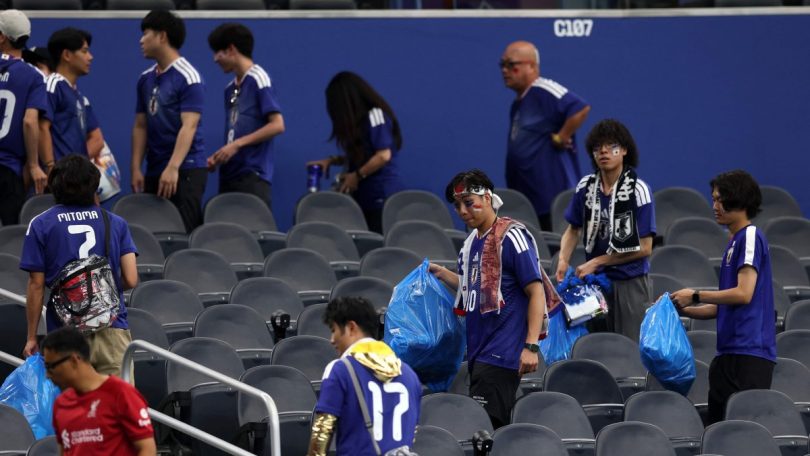

Japanese fans staying behind to clean stadiums after World Cup matches has become one of the tournament’s most recognisable images, turning a simple act of tidying into a symbol of respect and discipline. While it happens after the final whistle, this tradition still shapes how we interpret the 90 minutes we have just watched, reframing the emotional tone of victories, draws, and defeats for players and viewers alike. Seeing the clean-up as part of the football experience—not just a feel-good story—gives you a different lens on match atmosphere and fan culture.
Where The Clean-Up Tradition Comes From And Why It Stands Out
Japan’s stadium clean-ups are rooted in social habits that long predate modern football, including school routines where children clean their own classrooms and corridors as part of daily life. Sociologists note that tidying shared spaces is seen as a way of demonstrating pride in one’s way of living, so bringing trash bags to the World Cup feels like a natural extension rather than a stunt. What makes it stand out on the global stage is the contrast: where many fanbases rush out to celebrate or beat traffic, Japanese supporters calmly stay behind to pick up rubbish—often not just their own—until their section looks almost untouched.
How The Clean-Up Shapes The Emotional Arc After The Final Whistle
Most World Cup games end with a jolt: the whistle blows, tension snaps, and the stadium breaks into celebration or frustration as people pour out. In matches involving Japan, that energy shifts differently because a significant number of supporters stay in their seats, take out blue trash bags, and begin methodically collecting litter in near-ritual silence. For viewers, that scene softens the emotional edges of the result, turning a chaotic, noisy spectacle into a calm coda that invites reflection on what just happened tactically and emotionally on the pitch.
Instead of the camera cutting only to partying or distraught fans, broadcasters now regularly show Japanese supporters cleaning the stands, often paired with commentary about respect and culture. That final image lingers as part of your memory of the match, influencing how you remember the performance: not just as “Japan’s win” or “Japan’s defeat” but as a game framed by a particular kind of collective behaviour. Over a tournament, this consistency contributes to a stable, respectful identity that colours how you interpret Japan’s approach in future fixtures.
What You Notice When You ดูบอลสด With This Tradition In Mind
When you ดูบอลสด and know that Japanese fans will likely stay behind to clean, it changes how you interpret crowd shots during the match itself. The same fanbase that will calmly tidy the stands later often spends 90 minutes supporting without aggression, with coordinated chants and flags but very little hostility toward opponents or officials. That tone influences how players experience pressure: the demand is for effort and respect rather than pure outrage or blame.
From a viewing perspective, recognising that cultural context helps you read Japan’s on-pitch decisions differently. When the team keeps playing patiently even after setbacks, it is easier to see that as aligned with a wider culture of measured response rather than a lack of urgency. Over multiple matches, you begin to associate their ball circulation, defensive organisation, and reaction to setbacks with the same mindset you later see in the clean-up ritual after full-time.
How Post-Match Behaviour Reframes Performance, xG, And “Deserving” A Result
Expected goals (xG) and other metrics offer neutral views of chance quality, but the emotional framing of a match often comes from what happens in the minutes after the whistle. When Japanese fans stay behind to pick up trash after a painful defeat or a nervy draw, that behaviour can soften narratives of failure or disaster that might otherwise dominate coverage. Instead of focusing solely on missed chances or underperformance relative to xG, viewers are shown images of collective responsibility and calm, encouraging a more balanced reading of the match.
At the same time, the tradition can highlight how close games really were. If the data shows Japan created or conceded similar quality chances but the result turned on small margins, the post-match scenes of tidy stands and composed fans underscore that fine line: performance can be good even when the scoreline is harsh. For analytical viewers, this makes it easier to separate long-term trends—such as a solid defensive structure or efficient chance creation—from one-off results dictated by finishing variance or random deflections.
How To Avoid Over-Romanticising The Gesture
There is also a growing debate inside Japan about whether these clean-ups are entirely organic or partly performative, with some critics questioning if the same effort appears in everyday life back home. Social media discussions have pointed out potential double standards, arguing that international praise might be encouraging fans to lean into a neat global image. For viewers, acknowledging this criticism helps keep the interpretation grounded: the tradition can be both genuinely rooted in cultural norms and shaped by how it is received abroad.
A Simple Sequence For Reading Japan’s Fan Culture Around The Match
Because the cleaning scenes happen after full-time, it helps to think about Japan’s fan culture as a full-match arc rather than a viral moment. The sequence below shows how you can connect behaviour before, during, and after the game to what you see tactically on the pitch.
- Before kickoff: Look for organised, polite queues, coordinated banners, and national flags folded rather than discarded, as early signs of a respect-based fan culture.
- During the match: Notice how Japan’s supporters react to fouls, refereeing calls, and mistakes—do they maintain consistent support, or does frustration shift their tone?
- Final minutes: Track whether the crowd stays engaged and respectful even if the result is slipping away, which can influence how calmly the team keeps executing its game plan.
- Immediately after full-time: Watch whether fans leave en masse or stay seated, and how quickly blue trash bags appear around the stands.
- During the clean-up: Observe whether the mood is celebratory, reflective, or subdued, and link that to how you interpret the performance compared to basic stats or xG.
Using this structure, you move from seeing the clean-up as a one-off gesture to understanding it as part of a continuous behavioural pattern that interacts with how Japan approach matches on the pitch. Over a full tournament, you can then compare that pattern with other fan cultures—some loud and confrontational, others party-focused—and see how different emotional environments affect tactical risk-taking, composure, and in-game decision-making.
How The Clean-Up Tradition Shapes Global Expectations Of Japan’s Team
Because FIFA and global media regularly amplify these images, Japanese fans have built an international reputation for leaving stadiums spotless after World Cup matches, regardless of the result. This visibility creates expectations: neutral supporters now arrive at Japan games anticipating respectful behaviour, which in turn influences how referees, opponents, and broadcasters perceive the team and its fanbase. That halo of respect can subtly affect the tone of commentary and the level of scrutiny directed at Japan compared with more volatile ดูบอลสดคืนนี้ ช้าง cultures.
For viewers, it also means you come into each Japan match with a story already in mind—disciplined fans, tidy stands, respectful rituals—which can shape how you interpret even small deviations. If tempers flare or frustration surfaces, the contrast with the established image feels more dramatic; if the tradition continues unchanged in difficult moments, it reinforces the idea of cultural consistency. Either way, the clean-up scenes become part of the analytical background when you think about how Japan balance tactical ambition, composure under pressure, and public identity on the global stage.
Summary
Japanese fans cleaning stadiums after World Cup matches turn a simple post-game act into a recurring reminder that football sits inside broader values of respect, cleanliness, and community responsibility. For anyone watching full matches, this tradition changes how you experience Japan’s games, reframing reactions to xG swings, tight results, and emotional highs and lows through a calmer, more reflective lens. When the cameras linger on blue trash bags and spotless seats after the final whistle, you are not just seeing a feel-good clip; you are watching a cultural pattern that now shapes global expectations of how Japan play, lose, and win on the biggest stage.